
By Michael Quick, Chief Commercial Officer
Some conferences you fly to. This one came to us.
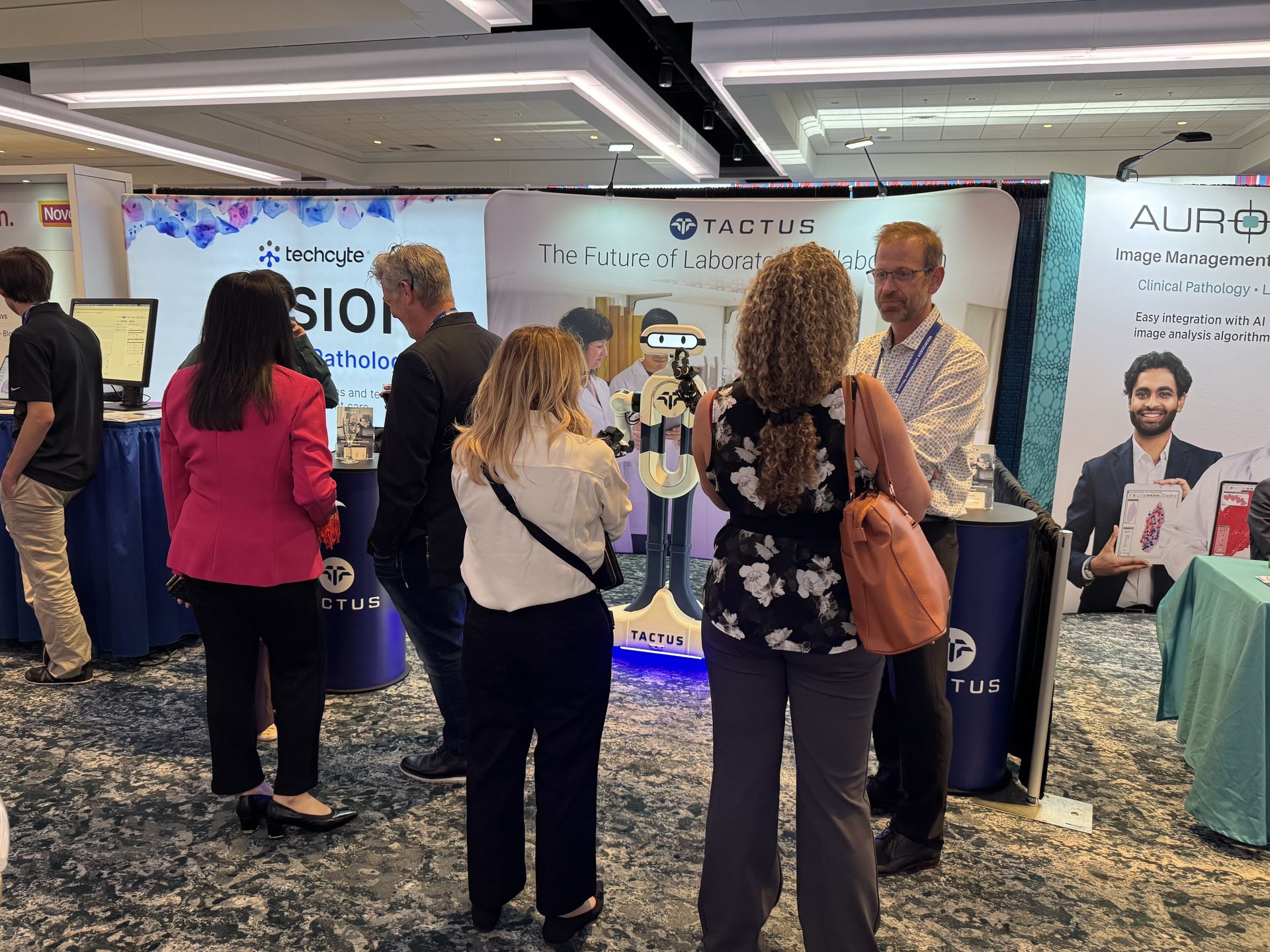
Pathology Visions 2026, the Digital Pathology Association’s annual meeting, landed at the Manchester Grand Hyatt in San Diego, October 16 to 18. That gave Elsie by Tactus, our humanoid lab assistant, the shortest commute in the building.
She spent the week at booth 412, rolled across the hall to visit a few friends, and at one point caught her own reflection in a slide scanner. (She took it well.)
Here’s the week in under a minute.
The part that isn’t digital
Digital pathology has come a long way. Scanners keep getting faster, image management keeps getting smarter, and the AI tools get more capable every season. Spend a week on a floor like this one and the digital side of digital pathology looks to be in very good shape.
There’s still plenty of room to grow, and that’s the part I keep turning over. When labs talk about what slows them down, workflow disruption comes up again and again. My take: a lot of that disruption isn’t digital at all. It’s physical.
The glass still has to move
That part is close to my heart.
Going digital doesn’t make the glass disappear. Someone still pulls racks off the stainer and coverslipper, loads the scanner, unloads it, sorts out the rescans and files the slides away. In most labs that someone is a skilled histotech, and that work lands on top of everything else they already do.
So a lab can buy a beautiful scanner and still find that its workflow got longer, not shorter. The scanner did its job. The next opportunity is the hands-on work around it.
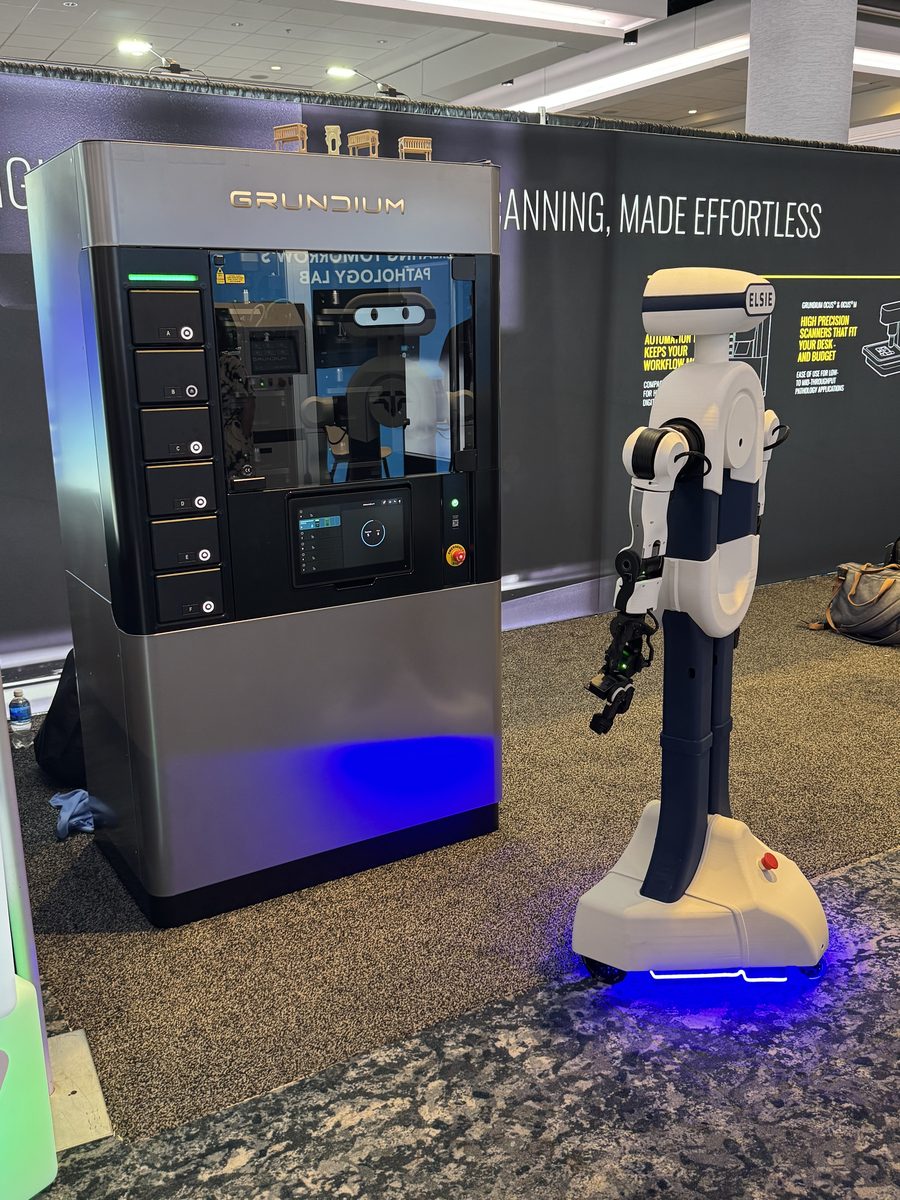
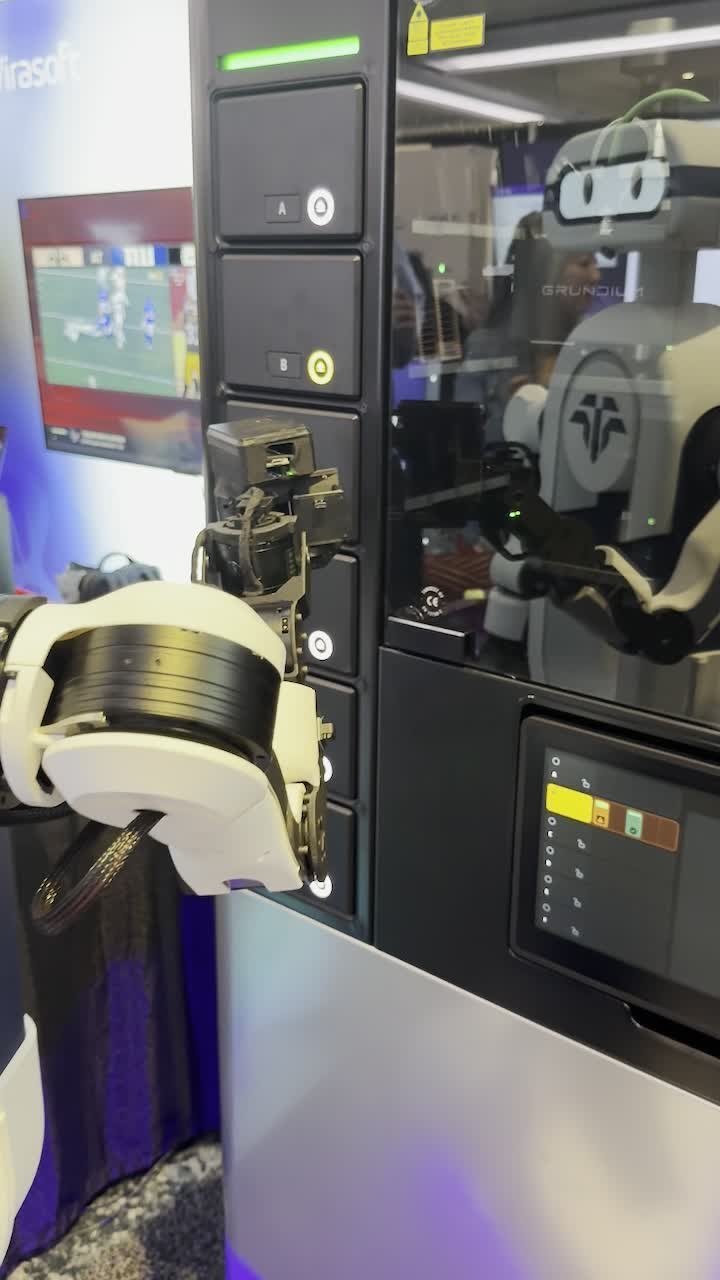
First stop, Grundium, where Elsie met her reflection.
Where Elsie comes in
This is exactly the work Elsie is built for. She’s designed to work at human bench height, with human tools, on the instruments a lab already owns. The goal: carry a rack from one instrument to the next, keep a scanner fed, and keep going after the room empties out.
Picture walking in at 7 a.m. to find last night’s slides already scanned and waiting in the queue. Picture your histotechs spending their morning on the work that truly needs their expertise. That’s the lab we want to help build, and it’s how more of a lab’s slides make it into the digital column.
Standing Elsie next to the scanners on the show floor made that point better than any slide I could have shown. People got it almost immediately.
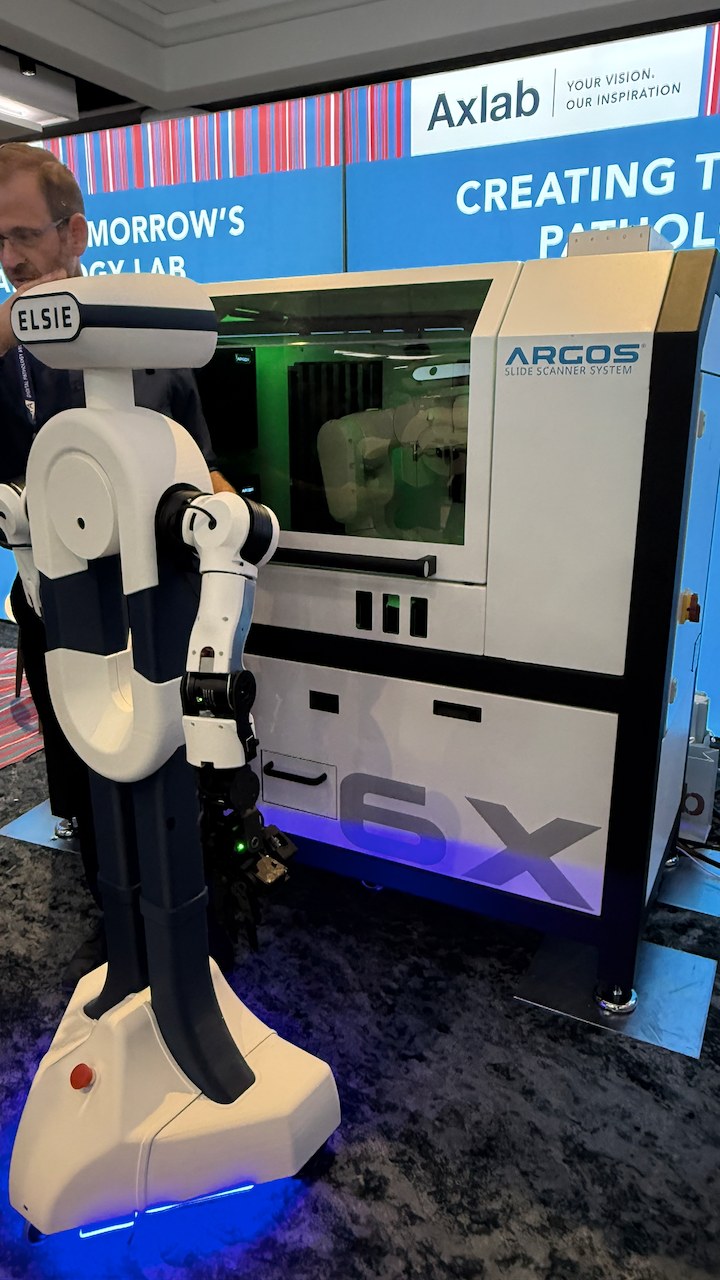
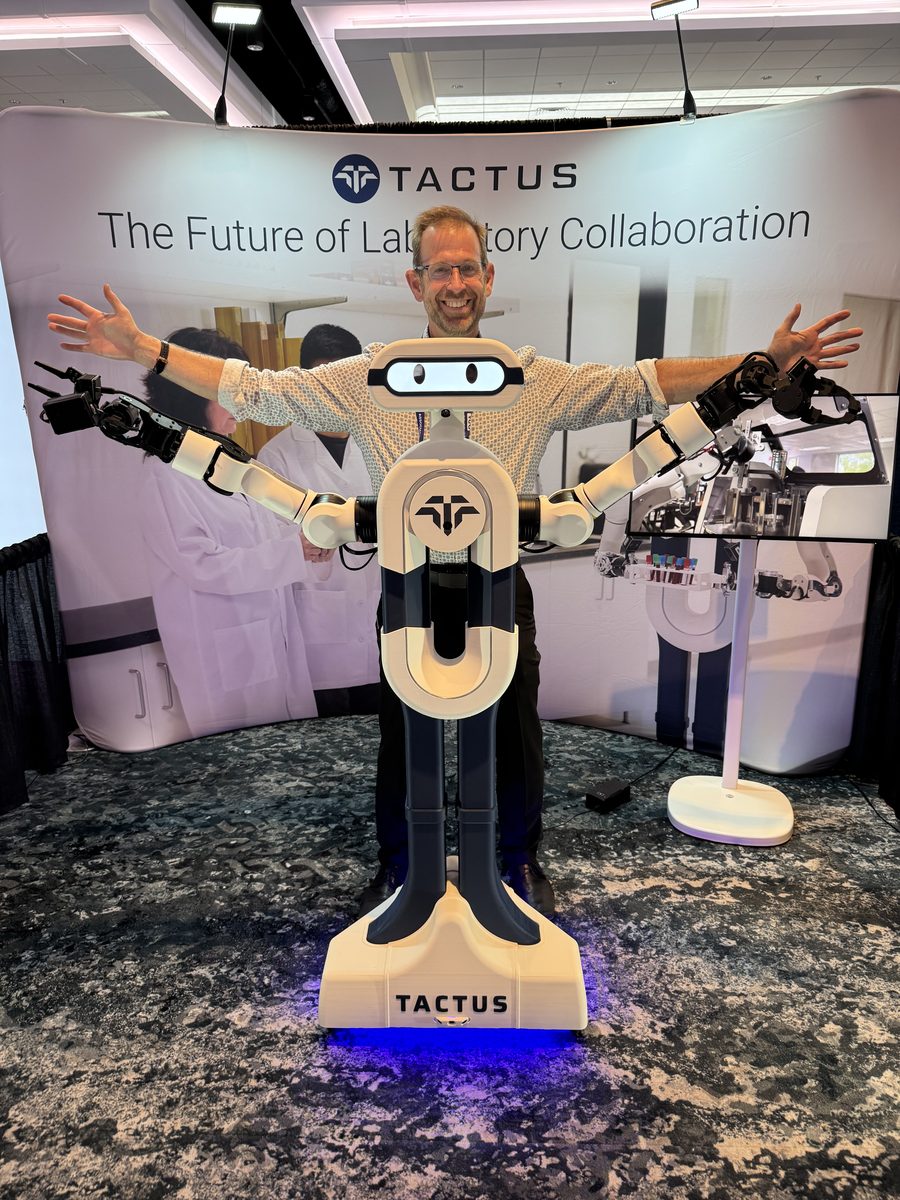
Next up, the ARGOS scanner at Axlab. Back at the booth, our CTO Casey Laris took her lead and matched the pose arm for arm.
Thank you, San Diego
A big thank you to Grundium and Axlab for welcoming Elsie to your booths, to everyone who stopped by 412 to say hello (and to take a selfie or five), and to the DPA for a terrific meeting in our hometown.
A few weeks ago at CAP26 I asked a room full of pathologists whether their labs were robot-ready. After Pathology Visions, I’d add a second one: what would it take to bring more of your lab’s slides into the digital column?
If we missed you at the show, or if you have an answer to that question, I’d love to hear how you see it.