
Is your lab robot‑ready?
Humanoid robots are stepping up to the bench. Answer fourteen quick questions about your lab — its instruments, its corridors, its doors — and get an honest readiness score, plus the exact punch list that would put Elsie to work in your lab.
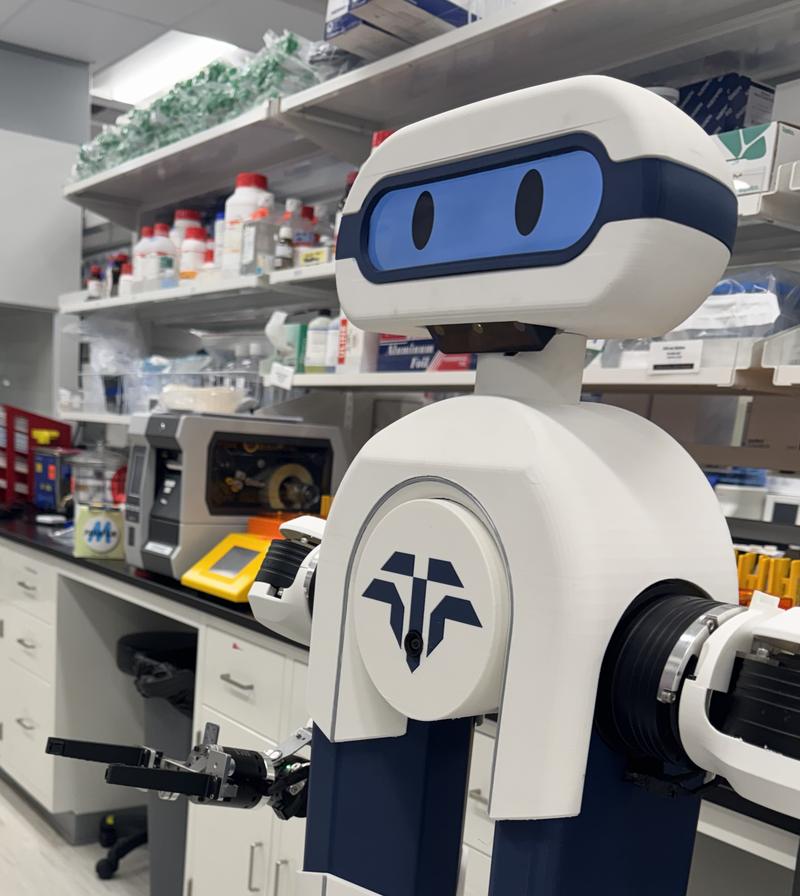
One loop. Four instruments. Zero IT projects.
One pilot focuses on the highest-value loop in digital pathology — the one that eats multiple staff trips a day in a busy lab. Elsie runs your instruments the way your technologists do: reading screens, lights and status indicators with her own cameras. No LIS integration. No instrument modifications.
Unload the coverslipper
Elsie watches for the ready indicator on your Leica or Sakura coverslipper, opens the drawer, and lifts the finished rack — clip and all.
Deliver anywhere in the lab
Down the corridor, through the doors, to the scanner room — or wherever slides need to be. All day, every rack, on her own.
Load & unload the scanner
Any open slot on your Leica GT450 or Hamamatsu S540. She monitors scan status and collects completed racks for foldering.
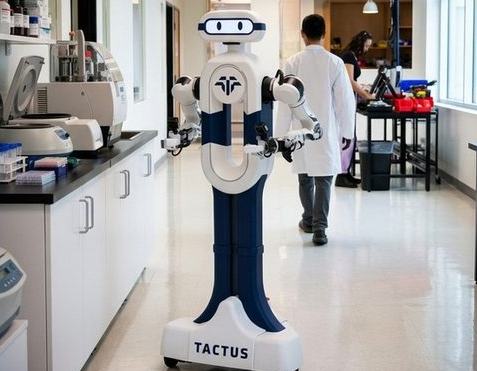
not just day shift
otherwise have to hire
Most of the work happens before a robot ever ships.
A humanoid doesn't show up and improvise. By the time Elsie rolls onto your floor, she has already run your workflow thousands to millions of times — in a physics-accurate digital twin of your actual lab.
Digital twin
A 3D model of your space built from a guided phone scan and your floor plan — real instruments at their real positions, bench heights, doorways, thresholds.
Simulation training
Thousands to millions of task iterations, including the corner cases: a rack placed crooked, a door that sticks, a cart in the aisle.
Physical validation
Sim-to-real transfer onto the same physical instruments in our San Diego laboratory before anything ships to yours.
On-site tuning
Elsie arrives already knowing the workflow. Final calibration to your space and your team — then go-live.
Fourteen questions between
you and your score.
Instruments, corridors, doors, power, people. Each question tells you a little about what robots actually need — and at the end you'll get a readiness score, a verdict, and your lab's personal punch list.
Nothing is submitted until you choose to share your results — until then, your answers stay in your browser.